31 de Jul 2019 | Coffee
The bee pollination service in coffee
Recent publications account for the decline of bee populations in the world, these pollinators are key to safeguarding food security. How much do we know about the pollination service that bees provide to coffee plantations?
Article by Diego Aliaga and Candy Carrera of the Scientific University of the South.
An imminent risk to populations of wild bees and honey bees due to the use of controversial neonicotenoid pesticides was concluded in an exhaustive evaluation prepared by the European Food Safety Authority (EFSA). The renowned scientific journalist Declan Butler published in the journal Nature a summary of this evaluation in March 2018, months later, the European Union would ban the use of these pesticides outdoors.
The concern on the part of the scientific community towards bees is born by the fundamental activity that they develop. In the book "Bees of the World", it is stated that "in terms of benefits for humans, the products of honey bees such as wax and honey, in addition to small amounts of royal jelly; they have a trivial value compared to the important role of bees as pollinators ”(Michener, 2007).
The concern on the part of the scientific community towards bees is born by the fundamental activity that they develop. In the book "Bees of the World", it is stated that "in terms of benefits for humans, the products of honey bees such as wax and honey, in addition to small amounts of royal jelly; they have a trivial value compared to the important role of bees as pollinators ”(Michener, 2007).

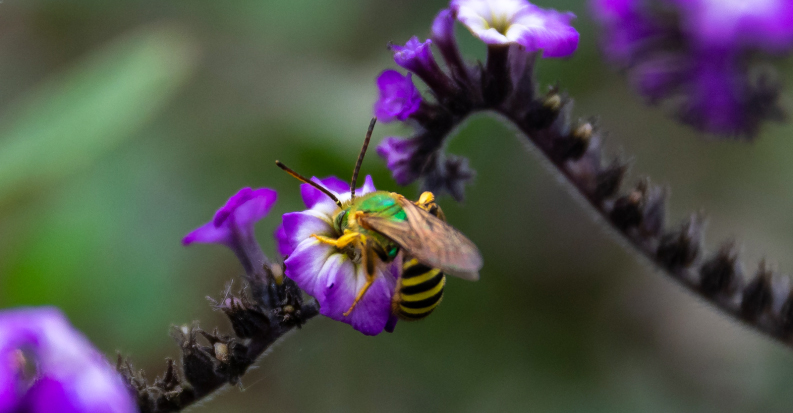
-La conducta de las abejas en la polinización: desde que se posan a libar el néctar de una flor hasta que deambula en búsqueda de más forraje. Fotografía por Erick Reátegui-
According to the UN, pollination is considered a service provided by the ecosystem; This is characterized by the production of fruits and seeds, thanks to the transfer of pollen from the stamens to the stigma. The pollination process is a transport or transfer service provided by pollinating agents, as diverse as rain, wind, birds or insects, such as bees. Some studies have determined that 35% of plant-based foods come from plants that depend on pollination by animals (zoopolinization); The relevance of the pollination service is that a third of the diet of humans is made up of vegetables, legumes and fruits, which are pollinated by insects, of which more than 90% are bees.
Coffee is one of the most economically important agricultural products worldwide, generates annual revenues greater than USD $ 15 billion from exports and provides a source of work for more than 20 million people in the world; “Coffee production is of great importance in the lives of millions of peasant families in the developing world, since small coffee farms produce about 75% of the world's coffee” (Remy and Glave, 2007).
Coffee is one of the most economically important agricultural products worldwide, generates annual revenues greater than USD $ 15 billion from exports and provides a source of work for more than 20 million people in the world; “Coffee production is of great importance in the lives of millions of peasant families in the developing world, since small coffee farms produce about 75% of the world's coffee” (Remy and Glave, 2007).

-The silks or zetas, are hairs that cover in many cases large amount of the body of bees, these structures allow greater adhesion of pollen grains. Photograph by Diego Aliaga-
The evidence indicates that coffee production is linked to the diversity of bees that visit it, which in turn depends on factors associated with the crop, such as forest cover, the proximity of remaining forests, the incidence of light and agronomic techniques management. (Klein et al., 2003; De Marco & Coelho, 2004; Klein et al., 2007; Vergara & Badano, 2008; Boreux, Kushalappa, Vasst & Ghazoul, 2013).
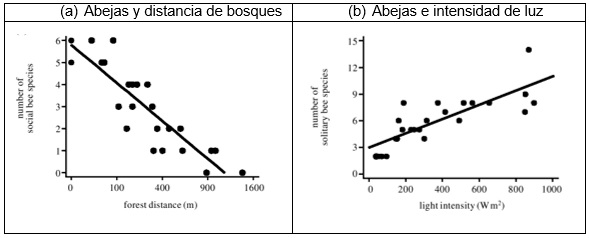
Populations of wild pollinators are an important resource to improve production. Investigations carried out in coffee plantations in Indonesia state that after the increase in the number of wild pollinators from 3 to 20, the increase in fruiting from 60% to 90% was recorded, which can be predicted by the number of bee species that forage in those coffee plantations . In the studies by Klein et al. (2003), they found key findings between interactions of bees and coffee plantations under agroforestry systems such as: (a) the relationship between the number of species of social bees and the distance to forests was compared , as can be clearly seen in the graph, the greater the number of species decreases; (b) the relationship between the number of species of social bees was compared with the intensity of light, a directly proportional relationship was evidenced.
Finally, in a world that seeks food security, but that generates the mass extinction of these tiny pollinating individuals so prone to subtle environmental changes, and seeing the relevance of one of the most cyclical goods such as coffee; The knowledge and recognition of beneficial roles for our agroecositemas open the door and generate an imperative need to study the work that insects - such as bees - provide us day by day.
___________________________________________________________________________
References:
1. Boreux, V., Kushalappa, C., Vasst, P. & Ghazoul, J. (2013). Interactive effects among ecosystem services and management practices on crop production: Pollination in coffee agroforestry systems. PNAS, 110, 8387-8392.
2. Butler, D. (2018). EU expected to vote on pesticide ban after major scientific review. Nature, 555 (7695), 150-151.
3. Canet, G., Soto, C., Ocampo, P., Rivera, J., Navarro, A., Guatemala, G. & Villanueva, S. (2016). Inter-American Institute for Cooperation on Agriculture (IICA). The situation and trends of coffee production in Latin America and the Caribbean. San Jose Costa Rica.
4. De Marco, P. & Coelho, F. (2004). Services performed by the ecosystem: forest remnants influence agricultural cultures pollination and production. Biodiversity and Conservation, 13, 1245-1255.
5. FAO. (2014). Principles and Advances on Pollination as an Environmental Service for Sustainable Agriculture in Latin American and Caribbean Countries. United Nations Food and Agriculture Organization. Santiago, Chile.
6. FAO. (2017). Baseline of the Ecosystem Service of Pollination in Peru, Synthesis Document. United Nations Food and Agriculture Organization. Lima Peru.
7. Klein, AM., Steffan-Dewenter, I. & Tscharntke, T. (2003). Fruit set of highland coffee increases with the diversity of pollinating bees. The Royal Society, 270, 955-961.
8. Klein, AM., Vaissiere, B., Cane, J., Steffa-Dewenter, I., Cunningham, S., Kremen, C. & Tscharntke, T. (2007). Importance of pollinators in changing landscapes for world crops. Proceedings of The Royal Society B, 274, 303-313.
9. Michener, C. D. (2007). The Bees of The World. 2nd ed. The Johns Hopkins University Press. Maryland.
10. Remy, M. I. & Glave, M. (2007). Business Coffee Growers. Associative dynamism for development in Peru. Lima: IEP.
11. Smith-Pardo, A. (1999). Porce bees family Colletidae (Hymenoptera: Apoidea) notes and keys for the genera present in the area of ??influence of the Porce II reservoir. National Faculty of Agronomy Magazine, 52, 599-610.
12. Vergara, C. & Badano, E. (2008). Pollinator diversity increases fruit production in Mexican coffee plantations: The importance of rustic management systems. Agriculture, Ecosystems and Environment, 129, 117-123.
1. Boreux, V., Kushalappa, C., Vasst, P. & Ghazoul, J. (2013). Interactive effects among ecosystem services and management practices on crop production: Pollination in coffee agroforestry systems. PNAS, 110, 8387-8392.
2. Butler, D. (2018). EU expected to vote on pesticide ban after major scientific review. Nature, 555 (7695), 150-151.
3. Canet, G., Soto, C., Ocampo, P., Rivera, J., Navarro, A., Guatemala, G. & Villanueva, S. (2016). Inter-American Institute for Cooperation on Agriculture (IICA). The situation and trends of coffee production in Latin America and the Caribbean. San Jose Costa Rica.
4. De Marco, P. & Coelho, F. (2004). Services performed by the ecosystem: forest remnants influence agricultural cultures pollination and production. Biodiversity and Conservation, 13, 1245-1255.
5. FAO. (2014). Principles and Advances on Pollination as an Environmental Service for Sustainable Agriculture in Latin American and Caribbean Countries. United Nations Food and Agriculture Organization. Santiago, Chile.
6. FAO. (2017). Baseline of the Ecosystem Service of Pollination in Peru, Synthesis Document. United Nations Food and Agriculture Organization. Lima Peru.
7. Klein, AM., Steffan-Dewenter, I. & Tscharntke, T. (2003). Fruit set of highland coffee increases with the diversity of pollinating bees. The Royal Society, 270, 955-961.
8. Klein, AM., Vaissiere, B., Cane, J., Steffa-Dewenter, I., Cunningham, S., Kremen, C. & Tscharntke, T. (2007). Importance of pollinators in changing landscapes for world crops. Proceedings of The Royal Society B, 274, 303-313.
9. Michener, C. D. (2007). The Bees of The World. 2nd ed. The Johns Hopkins University Press. Maryland.
10. Remy, M. I. & Glave, M. (2007). Business Coffee Growers. Associative dynamism for development in Peru. Lima: IEP.
11. Smith-Pardo, A. (1999). Porce bees family Colletidae (Hymenoptera: Apoidea) notes and keys for the genera present in the area of ??influence of the Porce II reservoir. National Faculty of Agronomy Magazine, 52, 599-610.
12. Vergara, C. & Badano, E. (2008). Pollinator diversity increases fruit production in Mexican coffee plantations: The importance of rustic management systems. Agriculture, Ecosystems and Environment, 129, 117-123.