17 de Jun 2021 | Cocoa
The challenge of the “Cafés del Peru” brand: Aligning expectations, objectives, and messages in a chain that seeks to consolidate
Managing assets as a country or regional brand is a challenge. The added value is not only based on transformation, but also on attributes that the market can recognize, starting with quality.
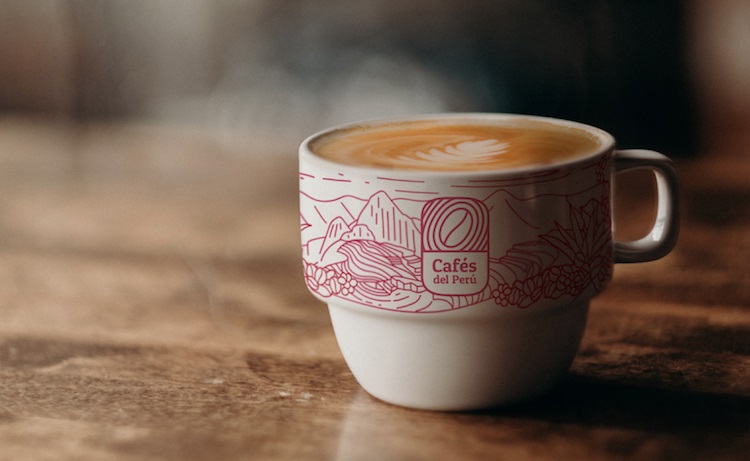
Peruvian coffee: challenges for the country's brand
Peru has a great product when it comes to coffee. There is no doubt that Peruvian coffee has special characteristics of flavor and aroma. The various awards it has won worldwide prove it. So its quality is not in dispute. However, according to Ray Meloni, former director of the Directorate of Distinctive Signs of INDECOPI (Peru’s National Institute for the Defense of Competition and the Protection of Intellectual Property), the questions still need to be answered:
How to enhance these special characteristics and communicate them to the world, in such a way that the world knows that we have a high value and high quality coffee?
How to sustain all this value proposition over time, through traceability, quality assurance and commercial promotion?
Luis Fernando Samper, who is an expert in geographical indications and coffee, an economist with more than 20 years of experience in intangible strategies associated with branding, marketing, sustainability, communication, intellectual property and innovation, gives us indications of how to respond to these questions:
"We have to understand what I can offer, what is my value offer, how can I synthesize it, and if I can synthesize it."
"This requires important reflections, such as: who do I want to sell to, what is my target audience and what is that target audience demanding."
"You have to make a match between what I can offer and what that target audience is demanding, you must have a criterion of why I am choosing that audience"
"An analysis is required at the individual level, if I am a producer, or at a collective level, if I am a collective, who I want to talk to, who is going to value what I offer, and understand very well what my value offer is"
Importance of a country brand
A brand is the base on which the image of a product is built so that it is accepted by target consumers. The brand goes beyond the logo or a color, it is a concept and, therefore, it must be made real.
Country brand means considering the total effort of a country as an organization. It involves a process of creating a more intangible tangible product offering. In addition, it involves competing, since there are several suppliers to satisfy the market demand.
The challenge for a country brand is to create a series of positive associations in the target consumer in a sustained way over time. For this, the organizational effort must endure representing value, culture and personality.
The effort consists of the articulation of public and private organizations. It happens when they know the actions they have to take and the importance of them in establishing the brand. It is effective when it is guided by a solid, coherent and sustainable strategy to achieve positioning in the foreign market.
What is essential is that the effort allows the target market to obtain a value greater than what other alternatives can offer.
The Coffee Brand of Peru
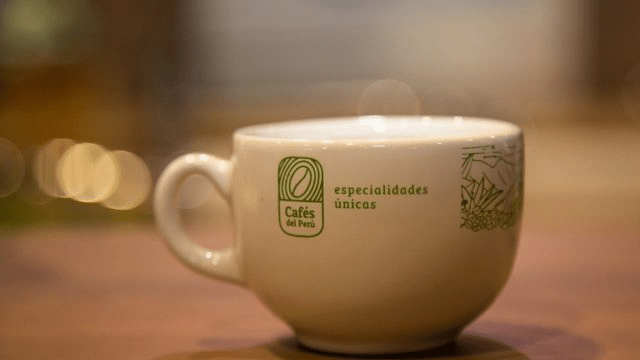
The “Cafés del Perú” (spanish for “Coffee from Peru”) brand was launched in August 2018 by PromPerú to distinguish Peruvian coffee for its diversity, specialty and origin. Its objective is to ensure that Peru is recognized by the national and international market as a coffee-growing country, capable of producing the finest and most select varieties in the world.
“The advantage of Peru having a brand is that before there was no distinctive sign that identified it, as Colombia had it with Juan Valdez. Today we have a brand that has the possibility for exporters to use it so that Peruvian coffees are distinguished” said Edgar Quintanilla, coffee and cocoa specialist in commercial promotion agribusiness in PromPerú.
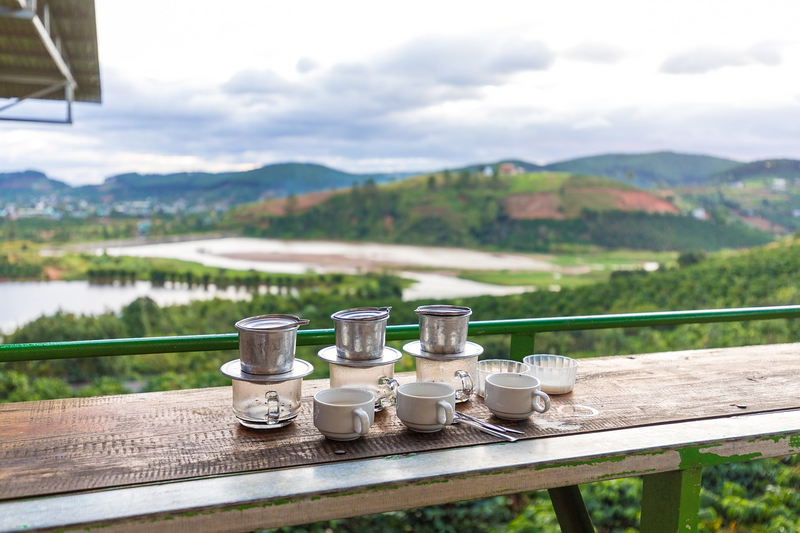
Efforts of a regional brand: The San Martín case
The San Martín - Peru region occupies the first place of coffee production, estimates from the Peruvian Chamber of Coffee and Cacao place its production between 900 thousand to 1.25 million bags of green coffee, which represent more than 25% of the national production.
The effort to develop an offer and achieve the positioning of the region's coffee also takes place in the domestic market.
The Regional Government of San Martín considers that the possibilities of selling its coffee within the country are immense. They promote activities to encourage the improvement of the quality of the grains that are produced and capture the added value that is generated in a regional brand for local consumers. Thus, they consider that farmers can benefit from a fixed market.
Data
According to INDECOPI (2020), the brand is one of the elements that can be used to add value to coffee. In the last ten years, the figures for trademark registrations related to coffee in Peru show the following:
There are 8,668 individual marks, 340 collective marks, and 11 certification marks.
Of the total registered trademarks, 68% are national and 32% foreign.
| replica Audemars Piguet |
Of the total of individual brands: 85% correspond to coffee brands and 15% correspond to coffee shop brands.
__________________________________________________________________________
References:
1) Barrientos, P. 2014. The development of the country brand: base to position itself through non-traditional exports. National University of San Marcos. 6 (1): 115-140- Lima, Peru.
2) Indecopi (July 2, 2020). Industrial Property Instruments for the coffee sector in Peru
3) Drafting Management (May 14, 2018). Indecopi: Peru leads the initiative for the legal protection of the 'Country Brand' at the regional level. Trade
4) Brand “Cafés del Perú” reaches the international market for the first time. (March 29, 2019). MINCETUR.
5) Huaytalla, V. 2020. The sectoral brand “Cafés del Perú” as a marketing strategy in Peruvian coffee exports.
6) The North Republic. (March 28, 2021). Coffee cultivation with agri-environmental models
7) DRASAM. (June 27, 2019). They encourage the internal consumption of coffee in San Martín.