12 de Feb 2021 | Coffee
Agroforestry-grown coffee provides Amazonian farmers with a sustainable alternative
Located in the southern part of the Brazilian state of Amazonas, the municipality of Apuí produces the first agroecological coffee in the Amazon since 2012.
- The municipality has one of the highest fire rates in the region and investing in social development is one way to combat land grabbing and deforestation for cattle pastures.
- Financed by the private sector, the agroforestry coffee project aims to integrate 200 family farms over the next three years.
- Studies show that agroforestry systems lessen the impacts of climate change on coffee production, improve yields, and allow farmers to grow additional plants for additional income.
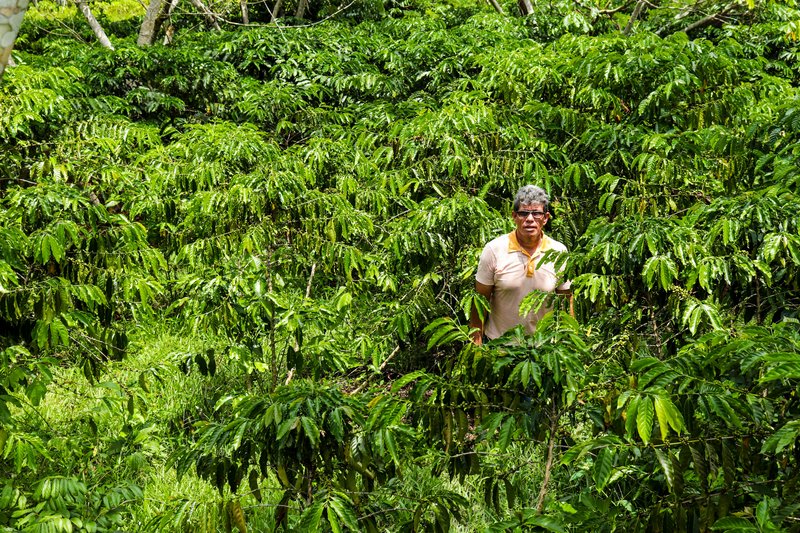
Farmer João Nilton Julião on his agroforestry coffee farm. Image courtesy of Idesam.
After almost giving up their coffee plantations, farmers in Apuí, in the Brazilian state of Amazonas, have opted for a different agricultural model. Through agroforestry, they have found that they can generate income and keep the forest standing. Apuí is among the top 10 municipalities in terms of deforestation rates in the Brazilian Amazon, driven by the growth of the livestock industry.
Introduced in 2012 with the support of the Institute for the Conservation and Sustainable Development of the Amazon (Idesam), Café Apuí Agroflorestal is the first coffee to be grown in an agroecological system in the state of Amazonas. The system has not only prevented cattle rangelands from taking over former coffee plantations, but has also doubled productivity in the region.
When Idesam started its project, farmers in the region were producing an average yield of eight bags of coffee beans per hectare, much lower than the municipality's potential. Today, the average harvest is 15 bags per hectare, and that number could grow to 25 bags per hectare.
“Today we have 30 families growing 50 hectares [124 acres] of coffee in an agroforestry system. But the potential is huge ”, says Marina Yasbek Reia, director of the Café Apuí Agroflorestal project.
"We used to harvest a little and sell cheap, we barely earned anything," says Ronaldo de Moraes, one of the farmers enrolled in the project. “Now we sell at higher prices and things are a little better. We can buy what we need to tend our crops and buy things for our homes, like a refrigerator or a stove.
"I'm happy," he adds. “There are many people working on this same project and everyone is happy. We made a little money, you know? It's a lot of work, but it's really worth it. "
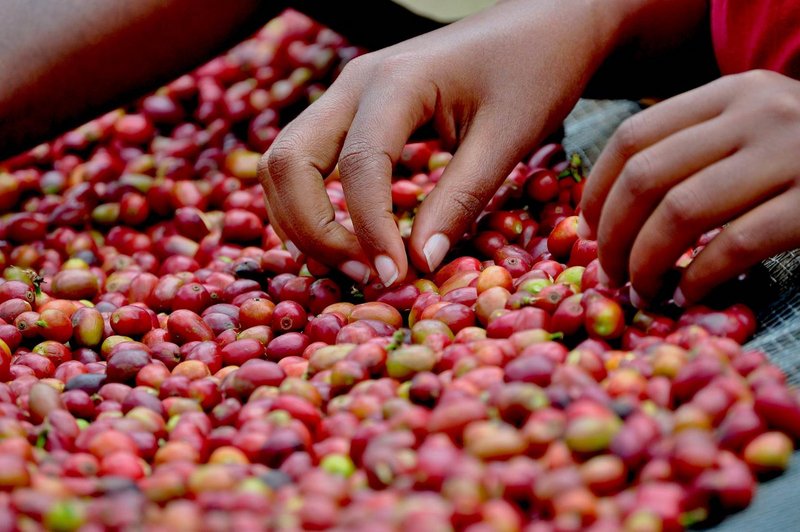
Apuí farmers grow robusta coffee (Coffea canephora), which is easily adapted to different growing conditions.
Image courtesy of Idesam.
Abandoned plantations offer opportunities
Located along the Trans-Amazon Highway near the border with the state of Rondônia, Apuí became a municipality in 1987 through development projects implemented under Brazil's military dictatorship. Five years earlier, the Rio Juma Settlement Project, the largest in Latin America at that time, had been created in the region. Settlers from all over Brazil flocked to the region to claim vast tracts of open land. The first groups of migrants came from the state of Paraná and were followed by people from other states in southern Brazil.
Many settlers already knew about coffee cultivation and brought with them their conventional monoculture cropping systems: large treeless plots flooded with sunlight, with pesticides in the mix. For about 20 years, coffee production was strong in Apuí. But the inevitable degradation of the soil caused farmers to start abandoning their plantations around 2012. “Without spending money on inputs, without constant technical support and, above all, without tropical technology or that more compatible with the Amazonian climate, the soil is wear out, ”Reia says. "Our soil is acidic, so if you don't work on it, you don't get coffee here."
When Idesam experts arrived in the region, they saw an opportunity. On the abandoned plantations, patches of forest had sprung up again, providing organic material to the soil and shade for the fruit trees. Coffee plants, in particular, do well in low light. As a result, the abandoned plantations were healthier than those cultivated with traditional methods.
This led the specialists to create a coffee model in Apuí based on the agroforestry system, where a mixture of crops is grown together with other plant species. Initially, each farmer received funds to rehabilitate one hectare (2.5 acres) of coffee plantation, which included the distribution of 10,000 seedlings of native Amazonian plant species during the first two years. Among them were trees that could be used for wood, such as jatobá and mahogany, and those that could be harvested for their fruits and seeds, such as cacao, açaí, chestnut, carapa, and copaíba. This gives farmers an additional source of income beyond what they get from coffee.
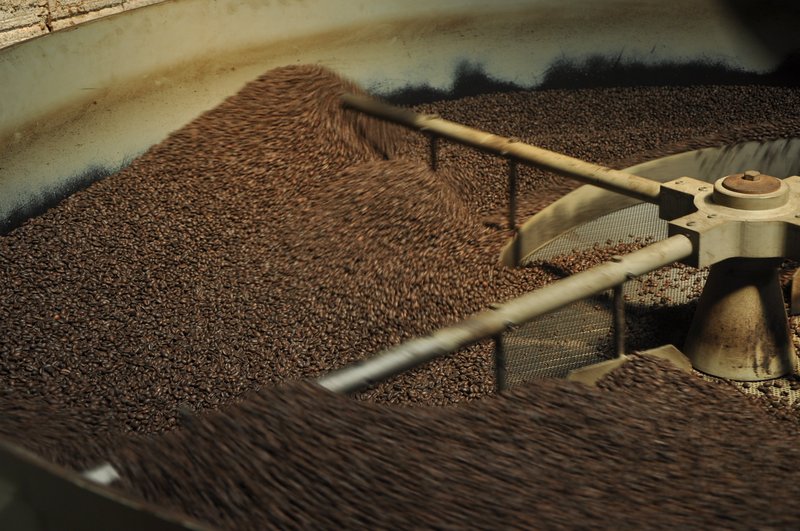
Roasted coffee beans in the Agroflorestal Café Apuí project. Image courtesy of Idesam.
Like the forest ecosystem it mimics, the Apuí agroforestry coffee project feeds a broader network. Cidades Florestais, also developed by Idesam with the support of the Amazon Fund, aims to produce essential and vegetable oils from native plant species. In Amazonas, six mini oil extraction facilities have been established, one of them recently inaugurated in Apuí, which will buy andiroba, copaíba and other species of aromatic plants grown by coffee growers.
The Café Apuí Agroflorestal project is funded by WWF, WeForest and, more recently, reNature. With a contribution of 300,000 euros ($ 36,400) from reNature in October, the goal is to expand the project by adding up to 200 family farmers over the next three years. Today, farmers who join the initiative receive ongoing technical support and subsidies of up to 15,000 reais ($ 2,800) in the form of inputs, seedlings, machinery and services. Idesam's objective is to make the project self-sufficient so that the sales of the coffee produced can cover the investments, which today come from private partners.
The project's supply chain connects farmers to a greenhouse that supplies native seedlings and a local roasting plant that roasts, grinds and packages the coffee. To bring the coffee to market, a startup called Amazônia Agroflorestal was created. Today, Café Apuí is sold in many Brazilian states, with the widest distribution in Amazonas and São Paulo, and has been exported twice to the Dutch firm Euro Caps, which produces coffee capsules for the popular Nespresso machine.
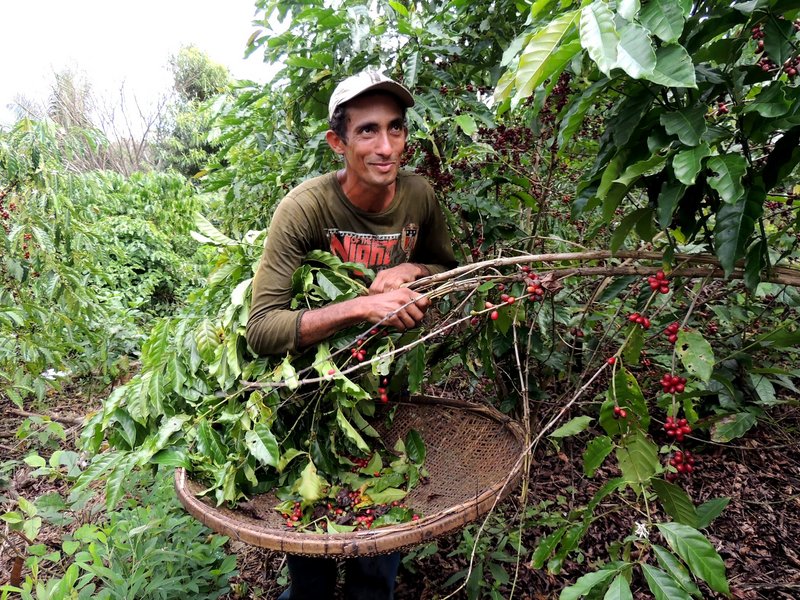
Farmer Ronaldo de Moraes harvesting coffee cherries. Image courtesy of Idesam.
Socio-environmental coffee plantations
"We want to grow while maintaining our connection to the landscape," says project manager Reia. “We will involve more families in the project because we want to create agroforestry corridors to connect the fragments [of the jungle]. This is very important."
Among the benefits of agroforestry are the protection of biodiversity, the enrichment of the soil, the reduction of erosion, the preservation of water quality and the reduction of the effects of climate change.
“Our soil got richer,” says de Moraes, the farmer. “In conventional [agriculture], we would spread poisonous [herbicides] to clear vegetation. That was already damaging the soil, which was always bare, it didn't have that dry layer of natural compost. This meant that the roots of the plant were exposed to the sun. Today the roots are covered by those dry leaves that retain more moisture. The coffee is more beautiful and we have a higher yield ”.
Reia says that investing in social development for small rural farmers in Apuí is a way to fight against the advancement of ranchers. Apuí is among the Amazonian municipalities that experience the highest rates of deforestation, largely through slash and burn. There were 837 fire outbreaks between January and July 2020, according to the date of Brazil's space agency, the highest number in the last 10 years. In July, Apuí was the municipality with the most fires within the states that make up the Brazilian Amazon. In 2019, it was among the top 10 municipalities by deforestation rate in the Brazilian Amazon.
"Families need to have the conditions to stay on the land, because if they stay on the land, they are a conservation factor," says Reia. “If they abandon their farms, the land grabbers soon move out and then trees are cut down to make extensive pastures. So it is really tragic, the sad situation here in the south of the Amazon, in Apuí, which is becoming a new vanguard for deforestation. The squatters work to connect small plots, cut down trees and make pastures. "
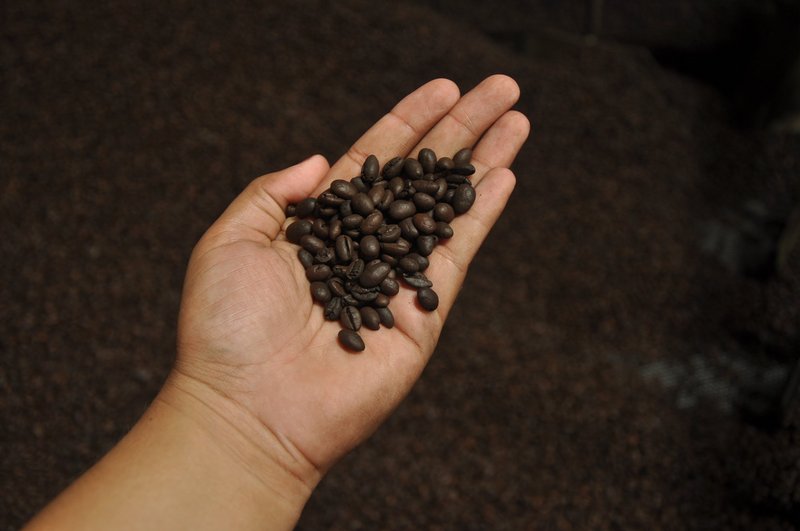
Apuí Agroflorestal Coffee beans recently began to be exported to Europe. Image courtesy of Idesam.
Agroforestry reduces the impacts of climate change
The impact of climate change on coffee production is already well documented. A 2015 study warned that rising temperatures and changing rainfall patterns would decrease the productivity of arabica coffee (Coffea arabica) worldwide, reduce quality, and increase pest and disease pressure.
In an analysis of the coffee growing regions in the Brazilian states of Minas Gerais and Espírito Santo, a study published last year by researchers from Wageningen University in the Netherlands and the Federal University of Viçosa (UFV) in Minas Gerais concluded that the Climate change could result in great loss of land suitable for Arabica coffee cultivation by 2050. The study also showed, however, that the loss can be reduced with the use of agroforestry systems.
"Arabica coffee does well in a very restricted temperature range averaging between 18 and 23 degrees Celsius [64 ° -73 ° Fahrenheit] during the year," says Lucas de Carvalho Gomes, one of the study's authors and Ph.D. candidate for the UFV. “However, planting trees along with coffee creates a microclimate that can lower maximum temperatures by as much as 5 degrees [9 ° F]. In addition to modifying the microclimate, trees also increase environmental services such as pollination and natural pest control. They also help to recycle nutrients by depositing leaves and branches in the ground ”.
Robusta coffee, the type grown in Apuí, is also sensitive to changes in temperature. A study published in Global Change Biology analyzed coffee production on nearly 800 farms in Southeast Asia over a 10-year period and suggested that the ideal temperature for robusta coffee is 20.5 ° C (69 ° F). Higher temperatures mean a lower yield for this variety, which accounts for 40% of world coffee production.
As both varieties of coffee are sensitive to climate change, there is growing recognition and appreciation for agroforestry in coffee production. (The popular 'shade grown' coffee is an example of agroforestry beans). Nestlé, the instant coffee giant, has invested since 2014 through its Nespresso brand in a partnership with the Pur Project business collective to implement the agroforestry plantation with coffee. farmers.
In Brazil, the world's largest coffee producer, most plantations still rely on conventional growing methods on treeless land, with the plants exposed to full sunlight.
"Coffee production in an agroforestry system requires greater care on the part of the farmer to regulate the amount of sun that coffee plants receive at certain times of the year," says Gomes of the UFV. “As sunlight varies according to latitude, each system must be designed according to the characteristics of the property and the forest species that the farmer chooses to use. The lack of knowledge of coffee producers about the practices that can lead to successful coffee production in an agroforestry system is also an obstacle to the growth of [this system] in Brazil. "
______________________
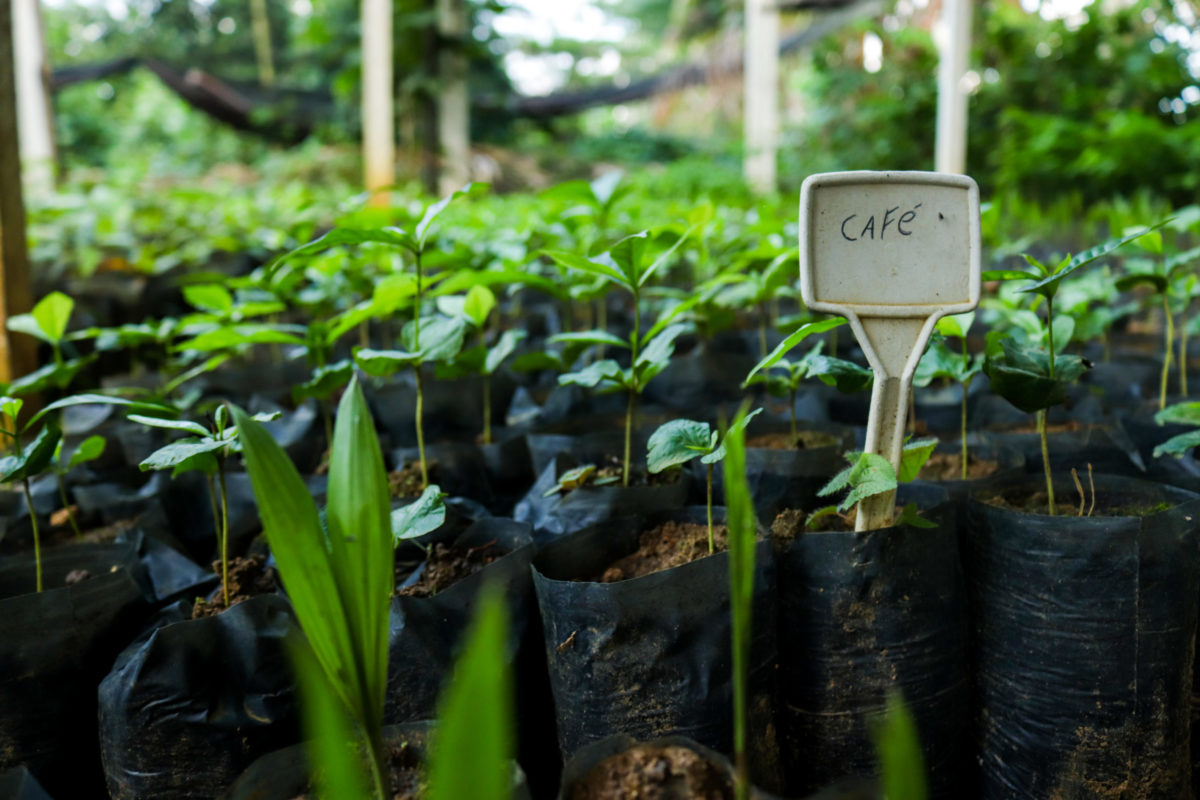
Header image of a greenhouse with coffee seedlings for the Agroflorestal Café Apuí project, courtesy of Idesam.
Source: Mongabay - Environmental News to inform and transform