02 de Dec 2021 | Coffee
Coffee Consumption in San Martín: A look at the habits and preferences of one of the most important producing regions of Peru
The team of the Peruvian Chamber of Coffee and Cacao, in coordination with the Swiss Cooperation and within the framework of the Alliance for Sustainable and Competitive Coffee Project, has been working on the preparation of studies and guidelines that will contribute to the National Plan for the Promotion of Domestic Consumption of coffee.

On this occasion, David Gonzales, coordinator of the Peruvian Chamber of Coffee and Cacao for the Alliance for Sustainable and Competitive Coffee Project, presented the preliminary results of a study on coffee consumption in the San Martín region.
How much coffee is consumed in Peru?
An important antecedent to this type of study on internal coffee consumption in Peru is the belief that Peruvians do not usually drink much coffee, and that in general there is a trend towards a low consumption rate, even in producing regions.
This belief is supported in the general balance of statistical reports for the last 40 years, where it was reported that per capita consumption of coffee in Peru was only 500 grams per year. One of the lowest in the region.
However, in recent years, the joint effort of different companies and institutions has generated an increasing trend in consumption, reaching a national average of 750 grams per capita, and up to 1,000 in some cities. And although this is encouraging for the sector, we cannot marry the data because there are certain important variables that must be analyzed and studied in depth.
What is happening in the producing regions?
As we have previously mentioned, in recent years there has been a joint effort by various actors to strengthen investment in the sector, and this is especially evident in the producing regions. In them we can observe the increase in quantity and quality of machinery, laboratories, laboratory equipment, toasters, technology, training; and in parallel we find an increase in coffee brands and cafeterias, among other undertakings. The effort is also made by regional governments and international cooperation, through projects and programs, through which they complement companies and investors, highlighting the importance of comprehensive and sustainable development in all chains.
In this sense, we can observe an important dynamism in the increase in coffee consumption in the producing regions in recent years, being singularly high, and highlighting the central north-eastern geographical area, a place of high importance for the business sector through operations in cities like Iquitos and Pucallpa.
An important hypothesis, in addition to the effect that the investment in the sector has had, is that currently there is also better management of the information collection systems.
The importance of studying consumption in producing regions
The investigative task that must precede the National Plan for the Promotion of Internal Coffee Consumption requires knowing the reality of the different regions and provinces. Unfortunately there are not many studies or specific information on coffee consumption in producing regions. That is why, within the framework of the Project Alliance for Sustainable and Competitive Peruvian Coffee, the Peruvian Chamber of Coffee and Cocoa highlights the importance of executing these studies with a view to a correct development of the National Plan for the Promotion of Internal Coffee Consumption, and the definition of the strategies to be implemented.
These preliminary findings correspond to one of the most important producing regions for the sector, and in which quite interesting changes are emerging: San Martín.
The case of the San Martin region
The San Martín region is one of the provinces that is characterized by drinking and buying ground coffee in a higher proportion than the national average (See figure 1).
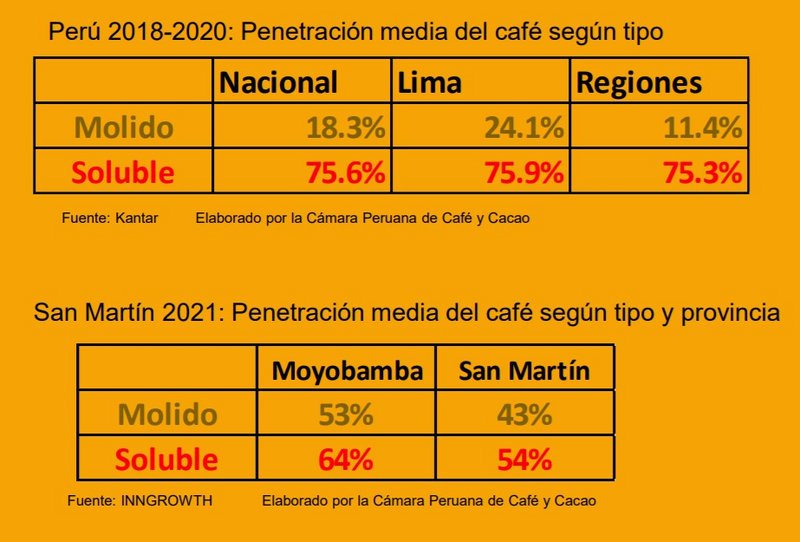
Figura 1: Penetración media del café a nivel Nacional, Lima, las regiones y San Martín
At present, their homes combine ground coffee with soluble coffee, that is, they distinguish between occasions and preferences. In addition, they are faithful to coffee consumption since 65% of the department of San Martín drinks it, a figure that becomes more prominent in its capital Moyobamba, where loyalty for coffee is greater than 80%.
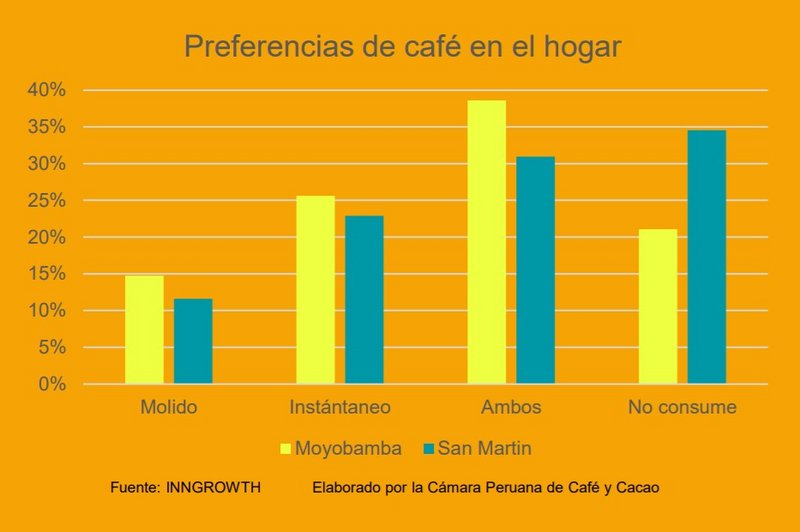
Figure 2: Coffee preferences at home - Department of San Martín
For this department, having a cup of coffee is part of a habit, especially in older populations where consumption is daily. In general terms, consumers in the region drink 4 cups a week, being the most recurrent occasion at the beginning of the day.
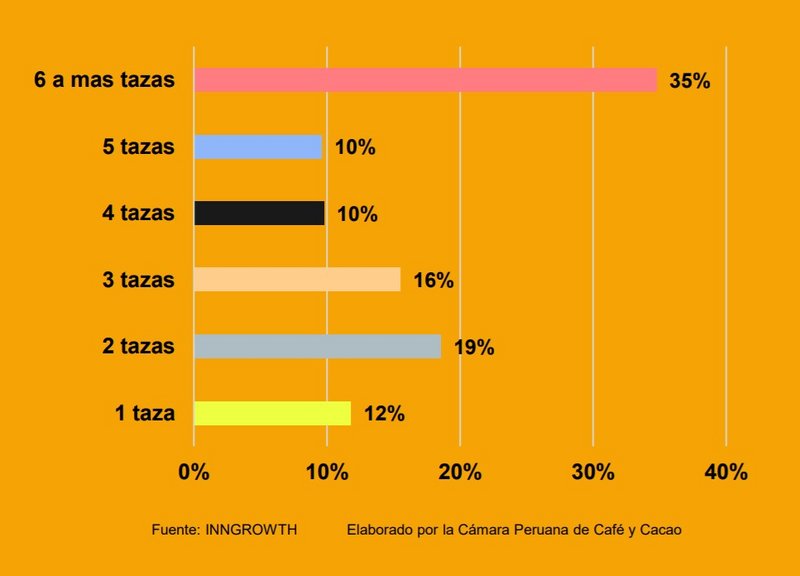
Figure 3: Number of cups consumed by the Department of San Martín per week
Regarding the preferences of the people of San Martín, in short, ground coffee is their favorite (64%), very close to soluble (60%). However, in terms of accessibility, the results indicate that it is possible to find soluble coffee in 54% of the wineries, while to access ground coffee you must travel greater distances, the most common access point being the markets where it is concentrated. 53% of this product.
Today, the consumption and production of coffee is part of the regional identity of the department of San Martín, as well as of other producing regions, whose cases must be studied and contrasted to understand the national scenario. These studies represent the foundations of the National Plan for the Promotion of Coffee Consumption.
To access the complete presentation on the preliminary findings of the study carried out in San Martín, click on the following link -> bit.ly/32Kky9H
Fact:
The National Plan for the Promotion of Coffee Consumption, and the studies and research that the plan encourages, are part of the Alliance for Sustainable and Competitive Coffee Project, executed by the Peruvian Chamber of Coffee and Cocoa and the National Coffee Board as part of the SeCompetitive Program of the Swiss Cooperation SECO, in collaboration with Helvetas Peru and the Swiss Embassy in Peru.
Sources:
1. Image rescued from https://cafelab.pe/2021/02/26/el-consumo-de-cafe-en-casa-crecera-un-33-en-los-proximos-cinco-anos/